A recently disclosed issue affecting seed generation in certain COLDCARD firmware versions has renewed industry attention on a fundamental self-custody question: how much should an asset-control system depend on any single device, implementation, or source of randomness?
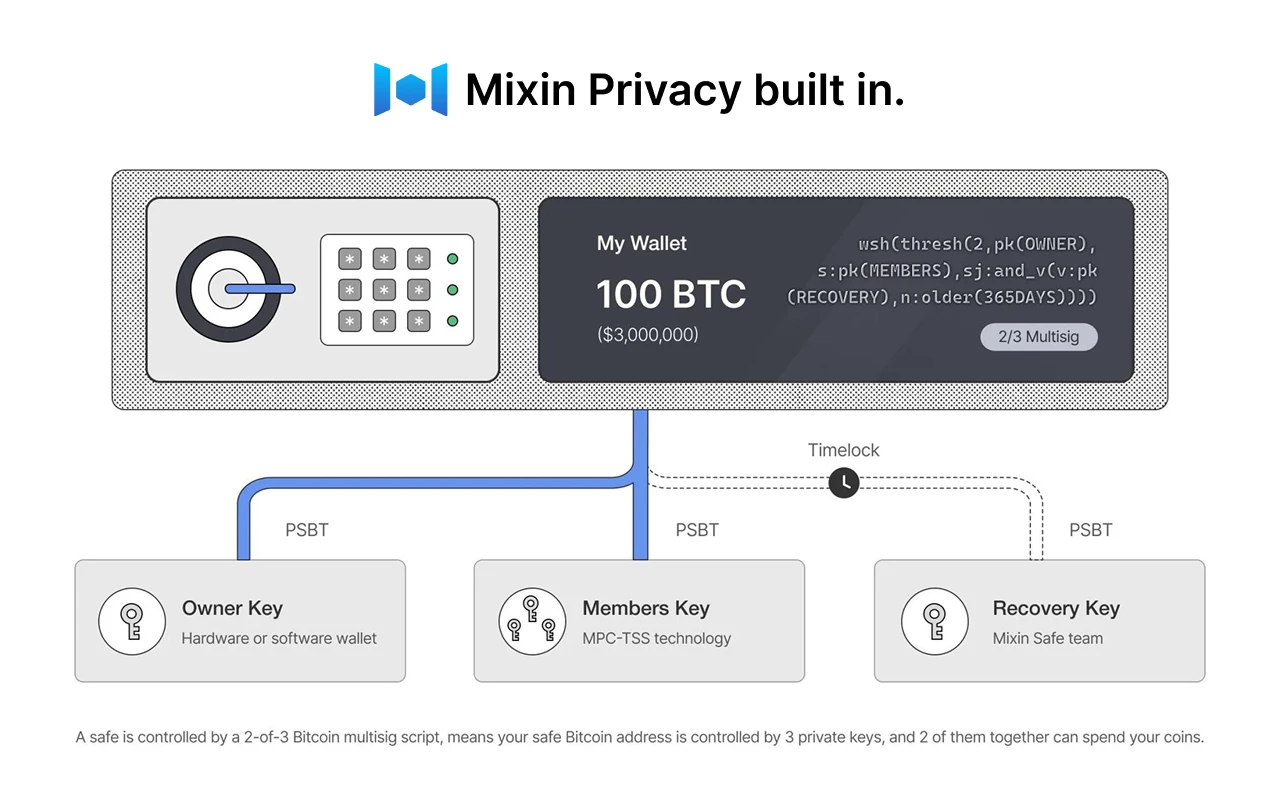
Mixin Safe, a multisignature self-custody product developed by Mixin, addresses this problem through separate key roles, MPC-based authorization, and on-chain relative timelocks. Its design aims to ensure that the failure of one component is not enough to compromise the entire system.
What the COLDCARD Incident Highlights
According to technical information published by COLDCARD manufacturer Coinkite, certain affected firmware versions did not use the intended hardware random-number-generation path when creating wallet seeds. This reduced the effective search space below the original security target.
Because the issue occurred when seeds were created, a firmware update can correct future seed generation but cannot repair an already generated affected key. Coinkite advised users to assess their exposure based on device model, firmware version, and seed-generation method, and to migrate assets to a newly generated seed where applicable.
The broader lesson is not that hardware wallets or open-source review have lost their value. It is that any individual device, firmware release, or security implementation can fail. A resilient self-custody architecture therefore needs to consider whether several critical components rely on the same underlying technology.
Multisignature Security Is More Than a Key Count
Multisignature can reduce the impact of one key being lost or compromised. However, simply increasing the number of keys does not guarantee meaningful isolation.
For example, a 2-of-3 wallet may still carry correlated risk if two threshold keys were generated by the same device model, firmware version, or entropy implementation. A shared vulnerability could weaken both keys at the same time and undermine the protection multisignature is intended to provide.
Users evaluating a multisignature setup should therefore consider:
- Who generates and controls each key
- Which devices and software implementations are involved
- Whether multiple keys share the same entropy source
- Whether recovery depends on the same infrastructure as routine spending
Three Separate Key Roles in Mixin Safe
Mixin Safe defines three distinct key roles and combines them through multisignature rules and relative timelocks:
- Owner Key: Generated and managed by the user through a compatible software or hardware wallet.
- Members Key: An MPC/TSS-based signing key authorized through the co-manager approval process.
- Recovery Key: A recovery key that can participate in spending with another valid key only after the relative timelock condition has been satisfied.
Separating these roles reduces reliance on a single device, signer, or implementation.
Routine Spending and Delayed Recovery
Before the relative timelock has matured, routine spending requires:
Owner Key + Members Key
After the predefined relative timelock condition is satisfied, two additional recovery paths become available:
Owner Key + Recovery Key
or:
Members Key + Recovery Key
The relative timelock does not unlock all assets on a fixed calendar date. Its waiting period begins after the relevant UTXO receives block confirmation, so every newly created UTXO has its own recovery delay.
This condition is enforced by Bitcoin consensus rules rather than being decided or modified by Mixin Safe. No single key role can move funds independently, whether or not the timelock has matured.
Limiting Single Points of Failure
Mixin Safe combines separate key roles, co-manager approvals, an MPC network, and on-chain time conditions to provide security isolation and recovery options in several failure scenarios.
If the hardware wallet holding the Owner Key is compromised, an attacker still lacks the Members signature. If an individual MPC node fails, it cannot independently produce a complete signature. If the Recovery Key is compromised, it cannot participate before the timelock matures and must still be combined with another valid key afterward.
If the Owner Key is lost, the Members Key and Recovery Key can complete recovery together after the required on-chain condition has been satisfied.
The objective is not to assume that every component will always remain secure. It is to design the system so that one component failing is insufficient to compromise asset control.
FAQ
Does the incident affect every COLDCARD user?
Exposure depends on the device model, firmware version, and method used to generate the seed. Users should follow the assessment and migration guidance published by Coinkite.
Can a firmware update repair an existing affected seed?
No. An update can correct future seed generation, but it cannot change a key that was already generated. Where applicable, users need to create a new seed and migrate their assets.
Why can multisignature wallets still have correlated risk?
If multiple threshold keys rely on the same device, firmware, entropy source, or implementation, one shared vulnerability may affect several keys simultaneously.
How does Mixin Safe reduce this risk?
Mixin Safe separates the Owner, Members, and Recovery key roles and combines multisignature authorization, MPC, and relative timelocks so that no single role can independently move assets.
Article Source
“Mixin Highlights Self-Custody Risks After COLDCARD Entropy Incident”
Source: Chainwire / TradingView
Published: August 6, 2026